
November 2, the Commerce Department’s Bureau of Industry and Security (BIS) released a rule adding 13 entities to the Entity List for supporting Russia’s military through the procurement, development, and proliferation of Russian unmanned aerial vehicles (UAVs). Twelve entities being added are in Russia and one is in Uzbekistan.
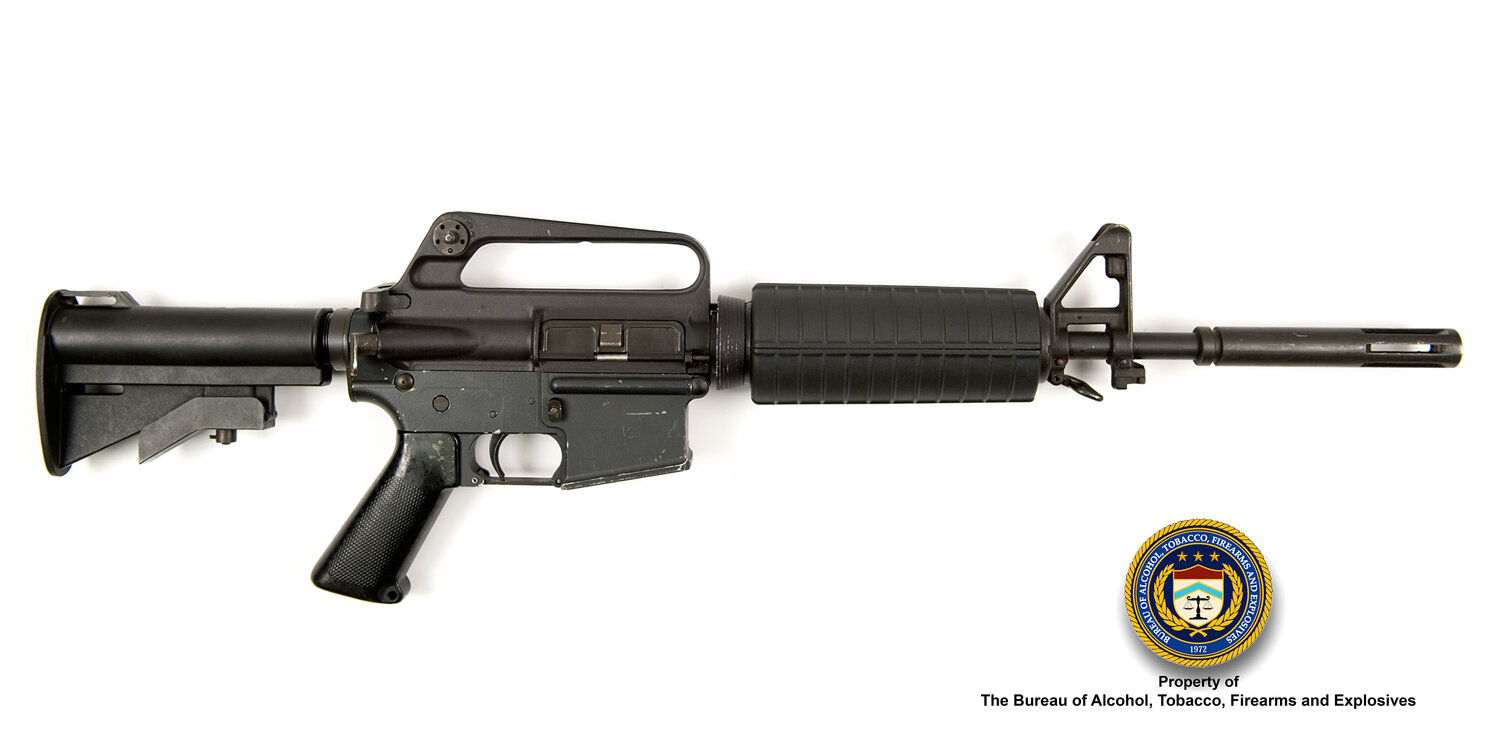
The U.S. Department of Commerce is pausing for approximately 90 days the issuance of new export licenses involving certain firearms, related components, and ammunition under its jurisdiction and the provision of new export assistance activities for such products to all non-governmental end users worldwide, apart from those in certain destinations.
Congressional-Executive Commission on China Chair Rep. Chris Smith (R-NJ) and co-chair Senator Jeff Merkley (D-Ore) are calling on the Administration to impose export controls on technology used by China to collect biometric data in Tibet. The request follows a prior letter by CECC Commissioners to the CEO of Thermo Fisher Scientific that expressed concerns that Thermo Fisher products were used for mass biometric data collection and surveillance that “could enable further gross violations” of the human rights of Tibetans.
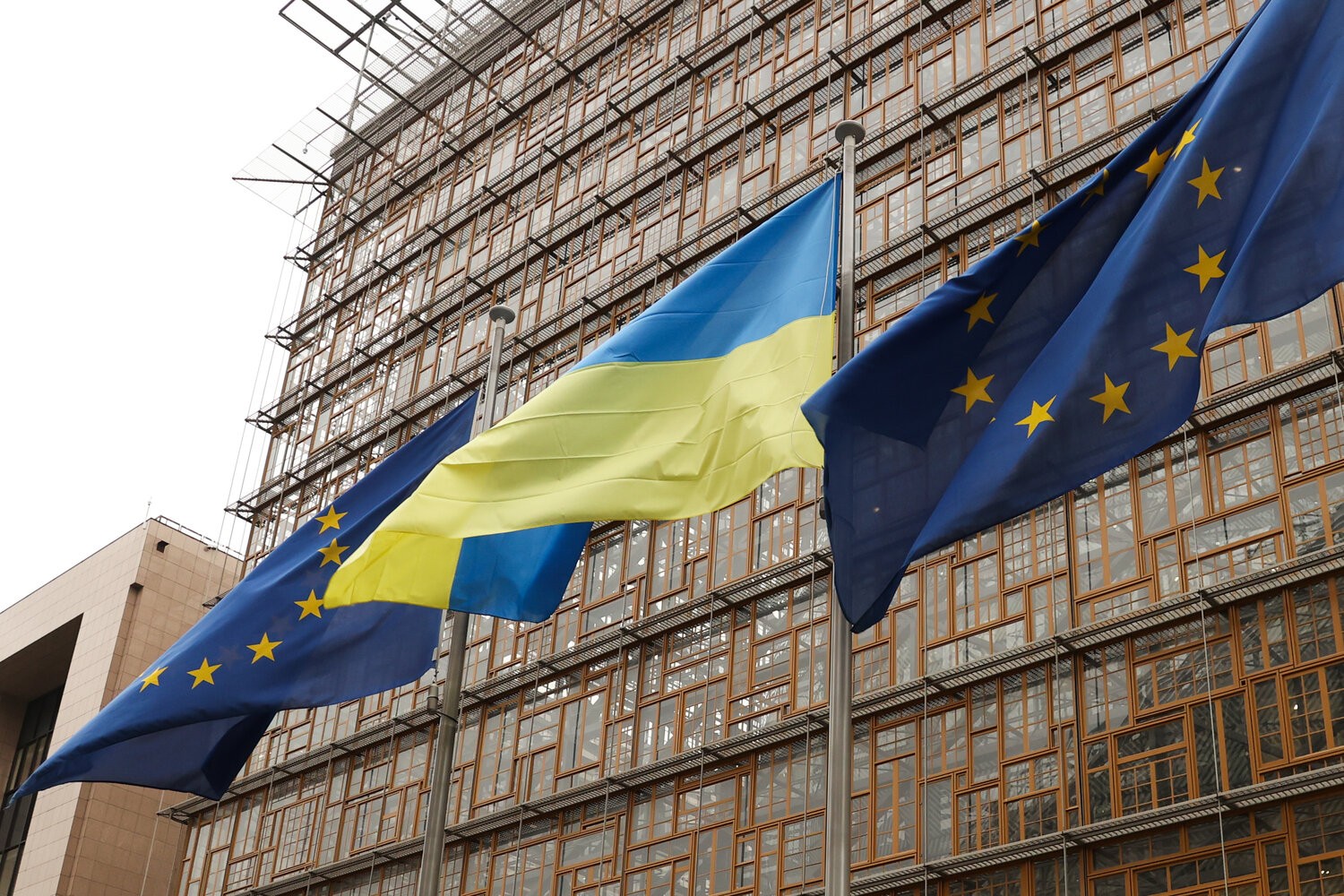
The European Commission is stepping up efforts to make sure that sensitive technologies do not fall into the wrong hands, by paving the way for better coordination of export controls at EU level. Under the EU’s Dual-Use Regulation, Member States have the opportunity to coordinate their export controls on items for which export controls have not been agreed multilaterally.
On November 6, 2023, Assistant Secretary for Export Administration Thea D. Rozman Kendler will conduct a public briefing on the two interim final rules and one final rule: “Implementation of Additional Export Controls: Certain Advanced Computing Items; Supercomputer and Semiconductor End Use; Updates and Corrections” and “Export Controls on Semiconductor Manufacturing Items,” which were both filed for public inspection at the Federal Register on October 18, 2023. BIS published an associated final rule, “Entity List Additions,” in the Federal Register on October 19, 2023.
The Commerce Department appears to be considering a fast-track system, posting on their website: "Submit your Israel licensing requests here: IsraelEmergencyLicense@bis.doc.gov". There is no further guidance, including whether the application must be submitted through the electronic export license application, known as SNAP, and the time limit for issuing ”emergency” export licenses.

On Tuesday 17 October, the Commerce Department tightened controls over exports of AI-specific semiconductors. This move makes it more challenging for U.S. firms like Nvidia and Intel to market their current products in China or to launch new products as workarounds. Addressing oversights: This step is designed to mend potential oversights in the export regulations declared last year. Those regulations had been met with notable resistance from the international semiconductor sector and increased strains with Beijing.

At the recent Defense Trade Advisory Group Meeting, Timothy A. Betts, the Acting Deputy Assistant Secretary, presented an overview of the significant developments and accomplishments of the Directorate of Defense Trade Controls (DDTC), as well as the announcement of his replacement by Compliance Director Jae Shin.

Two appeals related to Denial Orders affecting Russian and Turkish Airlines have been denied, one because the TDO had been reversed, and one because the complainant was not named. Pegas Touristik and Southwind Airlines had filed appeals based on the repetitional damage created by Temporary Denial Orders related to Nordwind Airlines, a Moscow-based holiday package carrier, which remains subject to sanctions. Pegas Touristik is the Moscow-based tour operator which has owned 100% of Nordwind Airlines since 2008. Southwind Airlines was formed in April 2022 in Antalya Turkey by Pegas Touristik in response to the US Sanctions on Nordwind. Despite the distinction, some MRO providers have been reluctant to maintain Southwind's fleet.

During the December 2022 Wassenaar Arrangement on Export Controls for Conventional Arms and Dual-Use Goods and Technologies (WA) Plenary meeting, Participating States of the WA made certain decisions affecting the WA dual-use and munitions control lists, which BIS is now implementing via amendments to the CCL. BIS seeks comments on restricting STA eligibility for countries in EAR Country Group A:5 of certain technology for the development of supersonic aero gas turbine engine components controlled under ECCN 9E003.k, formerly controlled under ECCN 9E001 as part of its ongoing assessment of current export control licensing policy.
The Commerce Department’s Bureau of Industry and Security (BIS) is issuing a rule updating the general authorizations for Samsung and SK hynix—companies headquartered in the Republic of Korea (RoK) – for their semiconductor fabrication facilities in the Peoples Republic of China (PRC). Samsung’s and SK hynix’s PRC facilities are Validated End-Users (VEUs). VEUs can apply for, and after national security review and approval by the U.S. government, obtain a general authorization to acquire certain items rather than seeking multiple individual licenses. Today’s rule updates the items that may be exported to these companies under the VEU authorization.
The Department of State, Directorate of Defense Trade Controls (DDTC) is issuing a new ITAR Compliance Risk Matrix, accompanied by a supplemental risk matrix specific to universities. These risk matrices are intended to assist organizations in assessing their level of ITAR compliance risk and assist in the evaluation of potential compliance risks that are specific to each organization and that, if left unaddressed, may lead to ITAR violations. The new risk matrices are available for download on the DDTC website.
Responding to the failure of the Commerce Department's October 7, 2022 rules to halt innovation at China's Semiconductor Manufacturing International Corporation Incorporated (SMIC), House Foreign Affairs Committee Chairman Michael McCaul (R-TX) and House Select Committee on the Chinese Communist Party Chairman Mike Gallagher (R-WI) have called on the adminstration to "rectify the failures by the Department of Commerce to enforce export controls on advanced semiconductors."
the Commerce Department’s Bureau of Industry and Security (BIS) added 49 entities to the Entity List for providing support to Russia’s military and/or defense industrial base. Forty-two …
The Department of Commerce’s Bureau of Industry and Security (BIS) has published new best practice guidance for industry to help prevent items that are considered the most significant to Russian weaponry requirements from being diverted for use in Russia’s war against Ukraine. The. Septermber 28 guidance recommends that exporters and reexporters of these highest priority items seek written assurances of compliance from their customers to help prevent diversion.
The U.S. is poised to indefinitely lift export restrictions on exports of semiconductor equipment to Samsung Electronics and SK hynix's China facilities. Business Korea reports the. …
The anthology titled "The Importance of Understanding Allied Perspectives," edited by Gregory C. Allen and published by the Wadhwani Center for AI and Advanced Technologies at CSIS, explores the …
As a follow-up to the establishment of the “Export Enforcement Five” or “E5” partnership to coordinate on export control enforcement issues in June 2023, the governments of Australia, Canada, New Zealand, the United Kingdom, and the United States have issued joint guidance to industry and academia identifying high priority items critical to Russian weapons systems and urging specific actions to prevent diversion of these items to Russia through third countries.
The Commerce Department’s Bureau of Industry and Security (BIS) added 28 entities to its Entity List Monday, 24 September. The entities include 11 in China, 5 in Russia, 5 in Pakistan, and others in Finland, Oman, Germany, and the UAE. They have been implicated in activities threatening U.S. national security or foreign policy.
In this final rule, the Bureau of Industry and Security (BIS) amends the Export Administration Regulations (EAR) to make a technical correction that also serves to clarify provisions of the EAR pertaining to the release of “software” as set out in the sections on release and transfer of access information.