Congress, through various means, has shown sustained interest in the export policy, emphasizing the balance between maintaining U.S. technological leadership and preventing adversaries from accessing advanced technologies. Christopher Casey of the Congressional Research Service penned a report released September 8 that frames this topic for policymakers and practicioners alike.
The Financial Crimes Enforcement Network (FinCEN) revealed a Financial Trend Analysis (FTA) concerning potential evasion of Russia-related export controls, based on Bank Secrecy Act (BSA) reports amounting to nearly $1 billion in suspicious activity. BIS utilizes data from BSA reports to instigate new investigations and support ongoing ones.
As of August 2023, EXIM continued to monitor a prior years's transaction of two satellites for the government of Mexico, according to a GAO audit of EXIM's compliance financing dual-use items. The first satellite, launched in December 2012, was a fixed-service satellite that went live in February 2013. The second, a mobile-service satellite, launched in October 2015 and became operational that December. The board last approved a new dual-use transaction in fiscal year 2012.
The State Department charged Island Pyrochemical Industries Corp. with three violations of the Arms Export Control Act and and the International Traffic in Arms Regulations on Aug. 25. According to the State Department, Island brokered with a Chinese company without its approval. The Department also charged Island with "falsely listing itself as the seller and source of the defense article on a DSP-5 license application" in 2015.
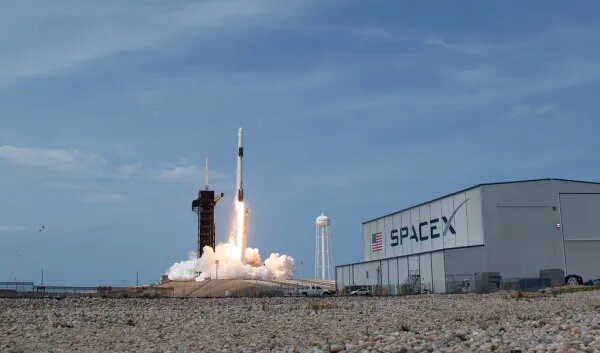
After complaining since at least 2005 that "we really need to do something about ITAR. It is really hurting U.S. industry,” and citing export controls for not hiring eligible non-citizens, South African immigrant Elon Musk's company SpaceX has been sued by the Justice Department for employment discrimination. The United States Department of Justice has filed a lawsuit against Space Exploration Technologies Corp. (SpaceX) for discriminating against asylees and refugees in its hiring process. The lawsuit contends that from September 2018 to May 2022, SpaceX deliberately discouraged such individuals from applying for positions within the company, violating the Immigration and Nationality Act (INA).
Republican leaders from the House and Senate wrote Commerce Secretary Gina Raimondo urging her to repudiate negotiations with the PRC on Export Controls before her visit to the country later this month. Rep. Mike Gallagher (R-WI) Chair of the House Select Committee on the Chinese Communist Party, Rep Michael McCaul (R-TX) Chair of the House Foreign Affairs Committee, Senator Bill Hagerty (R-TN), Ranking Member of the Senate Banking Subcommittee on National Security and International Trade and Finance, and Rep Young Kim (R-CA) Chair of the House Foreign Affairs Subcommittee on the Indo-Pacific wrote a letter to Ms. Raimondo after press reports indicated she is considering joining the Chinese government in a "working group" on the topic after her trip to China later this month.
Consistent with U.S. commitments as a participating country in the Nuclear Suppliers Group, this rule revises five existing Export Control Classification Numbers (ECCNs) under the Commerce Control List (CCL). These changes protect U.S. nuclear nonproliferation interests, while aligning the EAR with the control text agreed to by participating governments (PGs).

Treasury’s Office of Foreign Assets Control (OFAC) today announced a $660,594 settlement with Construction Specialties Inc, a Lebanon, New Jersey manufacturer and distributor of specialty architectural products. CS has agreed to settle its potential civil liability for three apparent violations of OFAC sanctions on Iran that arose from its United Arab Emirates subsidiary’s, Construction Specialties, Middle East L.L.C. (“CSME”), exportation of U.S. origin goods to Iran.

Bureau of Industry and Security (BIS) is amending the Export Administration Regulations (EAR) by adding additional nuclear nonproliferation controls on China and Macau, effective August 11, 2023. This change specifically applies to items controlled for Nuclear Nonproliferation (NP) column 2 reasons for control. These controls enhance U.S. Government efforts to monitor the export of these items and to ensure they are only being used in peaceful activities such as commercial nuclear power generation, medical developments, production of or use in medicine, and non-military industries.

Chairman Mike Gallagher (R-WI) of the House Select Committee on the Chinese Communist Party continued his quest with a letter calling for the Federal Communications Commisssion to answer questions about the role of the Chinese in the market for "Cellular IoT Modules," the radio devices which connect industrial equipment and home appliances to each other and central stations through the internet. Later in the week, Mr. Gallagher led a fact-finding mission to Australia to deliver a speech on "United States and Australia's rich history united by freedom, security imperatives, economic interests, and common values," according to a statement.

Free and Open Source Software (FOSS) refers to software that is released with a license that grants users the freedom to use, modify, and distribute the software. FOSS provides numerous benefits for developers, including collaborative development, flexibility, and the ability to leverage existing solutions. However, it also requires careful license compliance, intellectual property considerations, security awareness, community evaluation, integration management and as you will come to understand, unique Trade Control challenges.

The State Department has published an interim measure to streamline defense trade of U.S. origin items while the administration pursues legislative changes. The AUKUS pact, a defense agreement among Australia, the United States, and Britain, was signed in 2021 and involves $368 billion worth of investments.
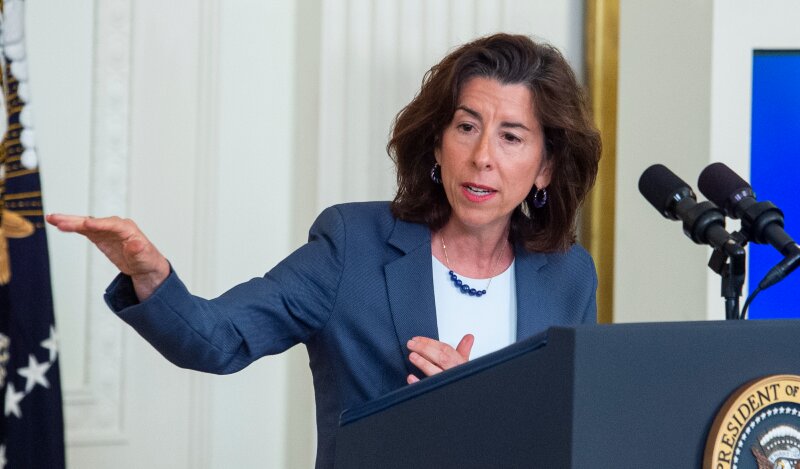
The Administration is not operating on a timetable for releasing highly-anticipated new export control rules on cutting-edge technology, Commerce Secretary Gina Raimondo said Wednesday. The focus instead is on getting the final rules right, so that US national security is protected but companies are not prevented from selling readily-available technology, she said at a program sponsored by the American Enterprise Institute.
With everyone in Washington now holding an opinion on Export Controls, the State Department's Bureau of Political - Military Affairs published a useful one pager.

BIS has published best practices for submitting export license applications for medical-related items destined for Russia, Belarus, and the occupied/covered regions of Ukraine. It reflects the U.S. Government's position that the Russian and Belarusian people are not the target of export controls imposed on Russia and Belarus due to their activities in Ukraine.

Bureau of Industry and Security (BIS) is adding four Cyber surveillance entities to the Entity List under the destinations of Greece, Hungary, Ireland, and North Macedonia. The ERC determined to add the firms to the Entity List for "trafficking in cyber exploits used to gain access to information systems, thereby threatening the privacy and security of individuals and organizations worldwide."
The State Department has published a Memo articulating the AUKUS Trade Authorization Mechanism (ATAM)designed to facilitate trade of U.S. defense articles and defense services between the United States, the UK, and Australia in support of AUKUS programs, The AUKUS Trade Authorization Mechanism will provide a consistent framework that will cover Direct Commercial Sales (DCS) (private sector-to-government or private sector-to-private sector transfers) as well as some items that were previously sold as Foreign Military Sales (FMS) (government-to-government agreements) but may be handled as DCS under ATAM.

Rep. Mike Gallagher (R-WI), Chair of the Select Committee on the Chinese Communist Party, and Rep. Virginia Foxx (R-NC) of the Education and the Workforce Committee, recently sent a letter to the President and Chancellor of the University of California, Berkeley. expressing concerns about the University's joint institute with Tsinghua University and the Shenzhen government in China.. The lawmakers pointed out that the Tsinghua-Berkeley Shenzhen Institute (TBSI) provides the People's Republic of China (PRC) with easy access to Berkeley's research and expertise. They emphasized that this access potentially allows the PRC to gain economic, technological, and military advantages.
The Department of Commerce launched the Data Privacy Framework (DPF) program website today, enabling eligible U.S. companies to self-certify their participation in the EU-U.S. Data Privacy Framework …
Emily S. Weinstein and Kevin Wolf, in their publication for Georgetown University's CSET, propose the application of existing U.S. "catch-all" export controls to manage the proliferation of artificial intelligence (AI) technologies, including large language models (LLMs) such as GPT-4. They argue that the Bureau of Industry and Security's (BIS) "catch-all" controls, part of the Export Administration Regulations (EAR), could be an effective tool to mitigate potential misuse of AI and LLMs, particularly in the context of weapons development or battlefield deployment.