
Federal prosecutors charged two men and unsealed additional allegations detailing a sophisticated scheme to illicitly acquire and export advanced Nvidia AI processors to China and Hong Kong, in violation of U.S. export-control laws.

Ryan Fayhee, now a partner at Akin Gump, led the issue with his contribution on extradition in export enforcement cases. The piece urged prosecutors to emphasize the deception rogue exporters and middlemen undertake to thwart U.S. national security restrictions in order to sway foreign counterparts, as well as the proper interpretation of dual-criminality treaties. The article was published near the end of Fayhee’s illustrious 11-year run at the U.S. Department of Justice, where he cut his teeth on cross-border investigations covering espionage, sanctions and embargoes, arms proliferation, trade secret theft, cybercrime, corruption, and money laundering. He capped his tenure in the department’s National Security Division as the government’s principal attorney for sanctions and export control prosecutions. Fayhee granted The Export Practitioner an interview, edited for length and clarity below, to discuss how international collaboration in export controls has evolved, how investigations look from the private sector and his ongoing work to bring people back to the U.S.

In 2013, when I wrote about the U.S. Attorney’s Offices Intelligence Specialist (IS) program, export enforcement was a critical but relatively narrow mission. Twelve years later, the national security landscape has dramatically shifted. Strategic competition with China, cyber operations, and supply chain security now define the contours of national security policy. Export controls sit at the center of this shift, reflecting a world where economic and technological dominance is as consequential as military might.

From 2007 to 2010, I was the lead prosecutor responsible for the investigation and trial of Chitron Electronics, Inc. (“Chitron-US”), and two of its executives. Over a six-week trial, we proved to the jury that Chitron-US was a Chinese front company used to illegally export U.S. military and sensitive electronic components to the People’s Republic of China (“PRC”) over a period of more than 10 years. In November 2013, I wrote this article to provide suggestions on how to identify, dismantle, and successfully prosecute illegal procurement networks. I left the government in 2022 after serving as national security prosecutor for more than 18 years and the National Security Chief for the U.S. Attorney’s Office for the District of Massachusetts. I now assist clients in mitigating risks of all kinds, provide guidance on developing robust regulatory compliance programs, and specialize in handling high-stakes criminal and civil litigation matters and government enforcement proceedings. From my new vantage point, this article provides detailed insight and an inside view of a sophisticated procurement scheme, which exploited loopholes in the U.S. supply chain.
December is upon us with its short days and long, dark hours made for reflection and review. As The Export Practitioner entered the home stretch of a year marked by policy and personnel upheaval in our nation’s trade and national security agencies, an old U.S. Department of Justice publication caught our eye.
Representatives Max Miller (R-OH) and Jefferson Shreve (R-IN) introduced the Addressing Dangerous Vulnerabilities in Exports and Research to Strategic Adversaries, Regimes, and Industrial Entities of Security Concern Act (ADVERSARIES Act), legislation aimed at closing what lawmakers describe as a critical loophole in U.S. export-control authorities that has enabled China-linked firms to evade scrutiny.
NVIDIA shares were up Thursday following reports that legislation to fund the Pentagon for FY2026 no longer includes a measure that would have obligated U.S. makers of artificial intelligence chips to prioritize supplying domestic companies over exporting their advanced semiconductors.
Taiwanese President Dr. Lai Ching-te used an interview December to discourage the U.S. from permitting sales of advanced artificial intelligence chips to mainland China, comparing the decision to a reckoning Taipei faced 25 years ago.
House Republicans warned that China is exploiting gaps in U.S. export controls to obtain semiconductor manufacturing tools critical to advanced chip production. At a hearing of the House Foreign …

The European Union has enacted a major overhaul of its dual-use export control regime with the publication of Commission Delegated Regulation (EU) 2025/2003 in the Official Journal on 14 November 2025, entering into force 15 November 2025.
The U.S.–China Economic and Security Review Commission on Friday released a staff report finding that China and Hong Kong have become the principal facilitators of sanctions and export-control evasion by Iran, Russia and North Korea.
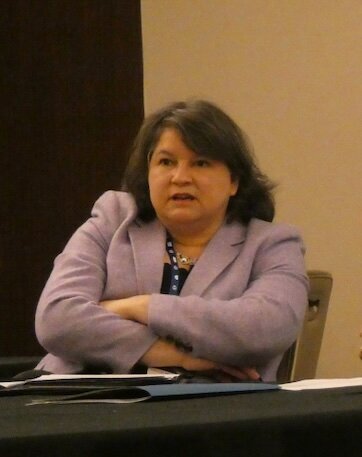
At a recent European export-control forum, former U.S. Assistant Secretary for Export Administration Thea Kendler described a global environment in which export controls have moved beyond traditional non-proliferation foundations and now sit at the center of great-power rivalry, supply-chain restructuring, and industrial policy.
A bloc of Senate Democrats is pressing President Donald Trump to reinstate the “affiliates rule,” a new Bureau of Industry and Security (BIS) export-control measure the administration suspended for one year as part of recent trade negotiations with China.

The Bureau of Industry and Security will officially wait at least a year, effective Monday, before the agency expands export licensing restrictions to cover corporations owned in part by restricted entities. The move, announced last month on the heels of President Donald Trump’s meeting with Chinese leader Xi Jinping, is best viewed as a deceleration of the policy’s rollout, according to experts.

The U.S. government approved the sale of 20 sniper rifles to the Rio de Janeiro state police special unit Batalhão de Operações Policiais Especiais (BOPE) in May 2023, despite internal objections from U.S. diplomats that the unit had a problematic human-rights record.

The Ministry of Commerce of the People’s Republic of China (MOFCOM) announced on Nov. 5 that it will remove and suspend several trade-control measures imposed on U.S. firms, effective Nov. 10, citing implementation of agreements reached during the recent U.S.–China economic and trade consultations in Kuala Lumpur.

As former Under Secretary of Commerce for Industry and Security, Alan Estevez has had a front-row seat to many of the technological shifts of the past three decades — and their growing influence on society, governance, and national security. The Export Practitioner spoke to the veteran of both the U.S. Department of Commerce and U.S. Department of Defense about the lengthy national security career he says he “stumbled” into, and some of the more recent shake-ups within the Bureau of Industry and Security. The conversation has been edited for length and clarity.

Commerce’s Bureau of Industry and Security (BIS) has renewed the Temporary Denial Order (TDO) against Mahan Airways, Iran’s largest private airline, and several affiliated entities, continuing a 17-year enforcement campaign over repeated export-control violations.
President Trump agreed this week to suspend for one year a contentious U.S. export-control measure that would have dramatically expanded the federal trade blacklist to include subsidiaries of sanctioned Chinese companies
The Bureau of Industry and Security’s (BIS) September 29 rule fundamentally restructures U.S. export compliance by shifting from name-based screening to ownership-based evaluation across three major restricted party lists: the Entity List, the Military End User (MEU) List, and the Specially Designated Nationals (SDN) List.