Chris Stagg and his team at Holland & Knight have published a survey of the U.S. Department of State’s Directorate of Defense Trade Controls (DDTC) regulatory agenda, highlighting ten planned International Traffic in Arms Regulations (ITAR) and U.S. Munitions List (USML) initiatives expected in the coming year.
A new report from the Center for Security and Emerging Technology (CSET) reveals how China’s People’s Liberation Army (PLA) is drawing on a growing array of civilian firms and universities to accelerate military adoption of artificial intelligence (AI).
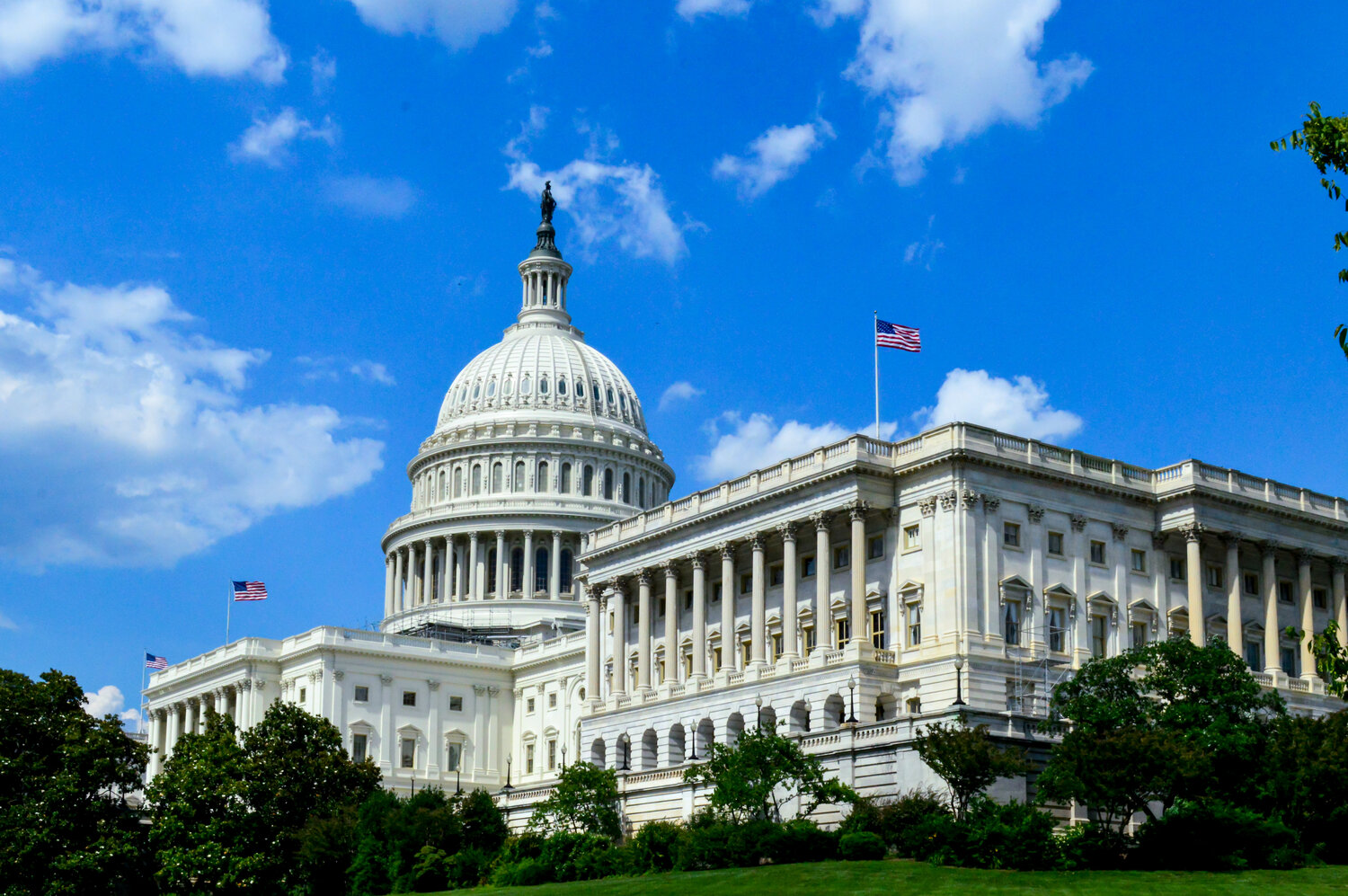
The U.S. House of Representatives on Tuesday passed three bipartisan bills spearheaded by the House Foreign Affairs Committee’s (HFAC) Foreign Arms Sales Task Force, advancing reforms to modernize the U.S. foreign military sales process, strengthen the defense industrial base, and expedite arms transfers to trusted allies.

The Department of State has issued an interim final rule revising the International Traffic in Arms Regulations (ITAR), updating several categories of the U.S. Munitions List (USML) and introducing a new license exemption for certain unmanned underwater vehicle (UUV) operations.
The Department of State has issued a 60-day notice seeking public comment on the renewal of an information collection requirement covering political contributions, fees, and commissions related to the sale of U.S. defense articles and services abroad
The Bureau of Industry and Security (BIS) has opened a 60-day comment period on its information collection covering export license exceptions and exclusions. The review, affecting more than 27,000 respondents, aims to balance streamlined export procedures with recordkeeping needed for national security oversight

The Commerce Department’s Bureau of Industry and Security (BIS) has issued a final rule revoking Validated End-User (VEU) authorizations for three major foreign-owned semiconductor facilities in China, closing a "loophole" that had permitted license-free exports of U.S. technology to those sites. The impacted facilities are owned by South Korean semiconductor manufacturers Samsung and SK Hynix.
The Bureau of Industry and Security (BIS) is extending public input on the renewal of its information collection program supporting national security and critical technology assessments of the U.S. industrial base as well as the collection of feedback from companies attending BIS export control seminars.

OFAC is amending the Syrian Sanctions Regulations to remove them from the Code of Federal Regulations , consistent with consistent with Executive Order 14312 of June 30, 2025, “Providing for the Revocation of Syria Sanctions.” OFAC emphasized that not all sanctions related to Syria are lifted.
A federal judge in California sentenced a Chinese national convicted earlier this summer of illegally exporting firearms, ammunition, and controlled technology to North Korea and acting as an illegal agent of the hermit kingdom to eight years in prison.
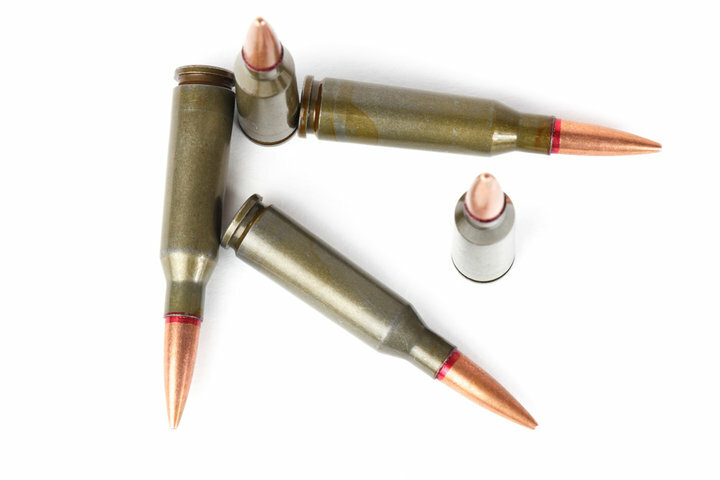
A federal judge in Brooklyn sentenced Vadim Yermolenko to 30 months in prison and forfeiture of more than $75,000 on Monday for his role in a scheme to procure ammunition and export-controlled electronics for two blacklisted Russian companies.
Former national security officials from both sides of the aisle have come out forcefully against a deal the White House announced in August to allow NVIDIA Corp. and AMD to sell advanced microchips in China in a profit-sharing arrangement that will hand over 15% of the revenue from those sales to the federal government.
U.S. faces “a wider set of threats from adversaries… than it did from the Soviet Union,” warn Navin Girishankar and Matt Borman, citing China’s civil-military fusion and “malign and mercantile tactics” to seize tech leadership. Critics overstate lost sales, they argue: “The real risk is… allowing China to reach the frontier faster… and displace American products.”
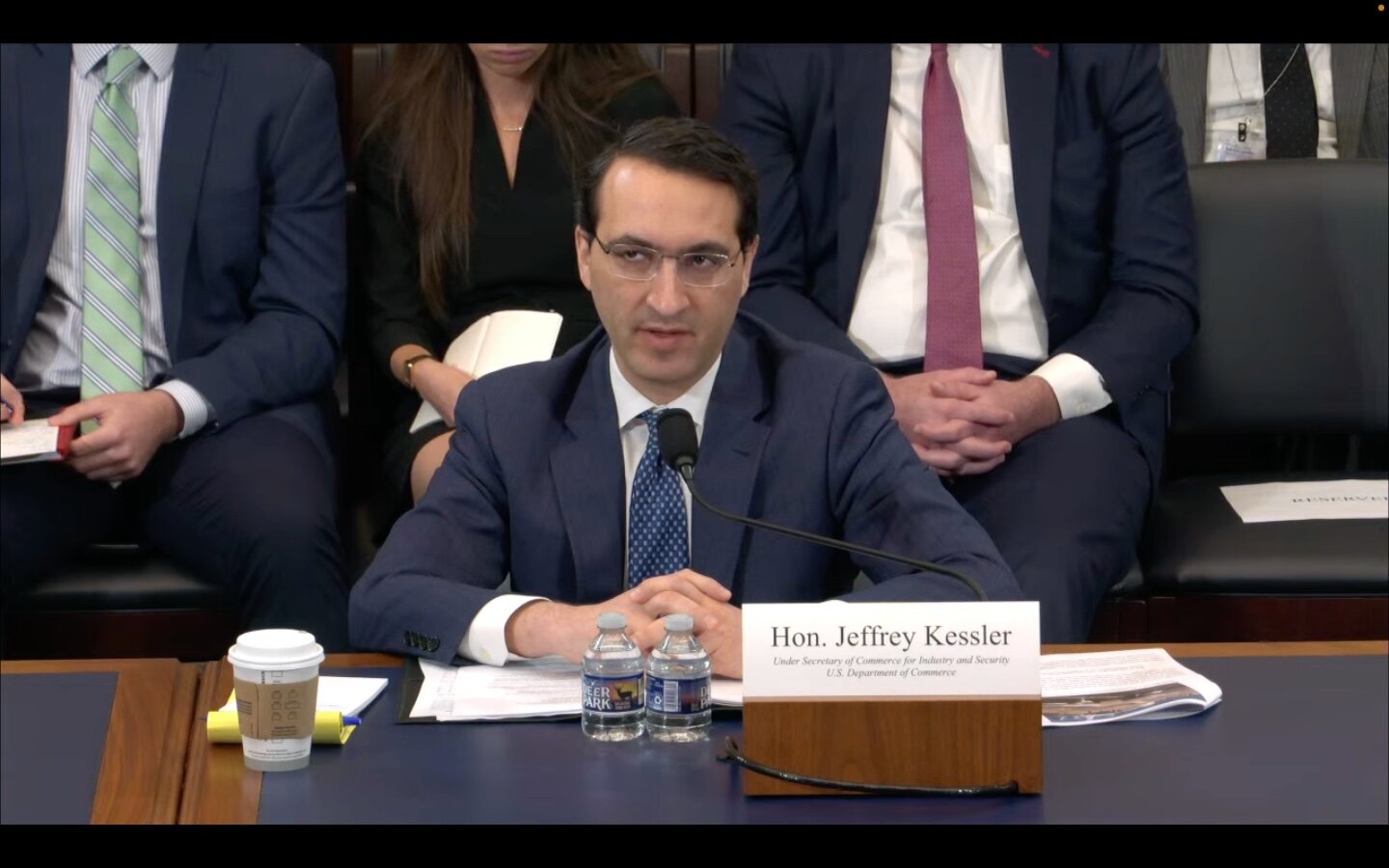
Nearly three months after Under Secretary of Commerce for Industry and Security Jeffrey Kessler assured Congress that his bureau was “driving forward” U.S. export control policy, internal and external frustrations are mounting over what industry, lawmakers, and former officials describe as a near-paralysis in licensing and rulemaking.
Nearly two months after Under Secretary of Commerce for Industry and Security Jeffrey Kessler assured Congress that his bureau was “driving forward” U.S. export control policy, internal and external frustrations are mounting over what industry, lawmakers, and former officials describe as a near-paralysis in licensing and rulemaking.
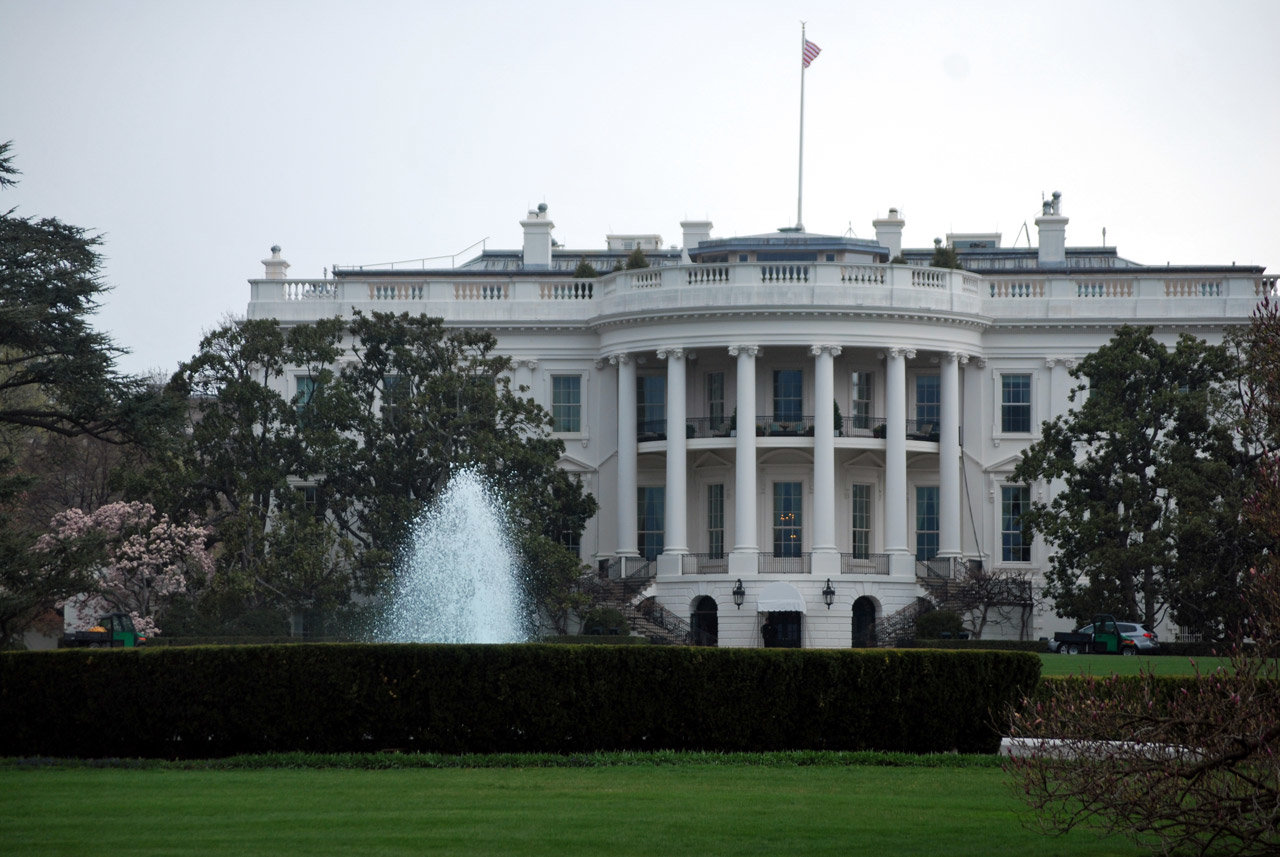
As the Trump Administration appears to pull back from enforcing export controls on China—reportedly to avoid disrupting a potential trade agreement—twenty prominent national security voices with strong conservative pedigrees, along with Congressional leadership are warning against the move.

The White House this week unveiled America’s AI Action Plan, a sweeping federal strategy that expands U.S. export controls and national security safeguards to protect artificial intelligence leadership amid rising geopolitical competition. The Plan identifies the AI technology stack—including chips, models, and software—as strategic assets central to national security. It outlines measures to tighten control over AI chips, models, and infrastructure while denying adversaries—especially China—access to U.S. innovations.

Officials from China and the U.S. confirmed plans to meet in Stockholm on July 27 for a third round of trade talks, a conversation that is likely to touch on the future of embattled arbiter of Gen-Z culture TikTok, according to U.S. Secretary of Commerce Howard Lutnick.
Four Democratic members of the House Foreign Affairs Committee’s Bipartisan Arms Sales Task Force have introduced legislation aimed at closing an oversight gap in the U.S. arms export process. The Silver Shield Operational End Use Monitoring Act would establish a new monitoring framework to ensure U.S.-supplied weapons are not used in war crimes or violations of international law.

The House Foreign Affairs Committee has advanced six bipartisan bills relating to foreign arms sales for consideration by the House when they return from the summer recess. Along with anticipated legislation, lawmakers approved a bill expediting arms sales to countries which have recognized Israel.