

The U.S. Census Bureau and the U.S. Bureau of Economic Analysis reported Thursday that the U.S. goods and services trade deficit increased to $70.3 billion in December 2025, up $17.3 billion from a revised $53.0 billion in November. Exports declined to $287.3 billion while imports rose to $357.6 billion. The increase reflected a larger goods deficit and a smaller services surplus.

The Supreme Court of the United States ruled 6–3 that the International Emergency Economic Powers Act (IEEPA) does not authorize the President to impose tariffs. The decision invalidates the Administration’s “reciprocal” tariffs imposed under IEEPA on most U.S. trading partners.

The statute President Donald Trump used to craft punitive tariffs on dozens of U.S. trade partners does not authorize the White House to impose tariffs, the Supreme Court held in a 6-3 decision Friday.
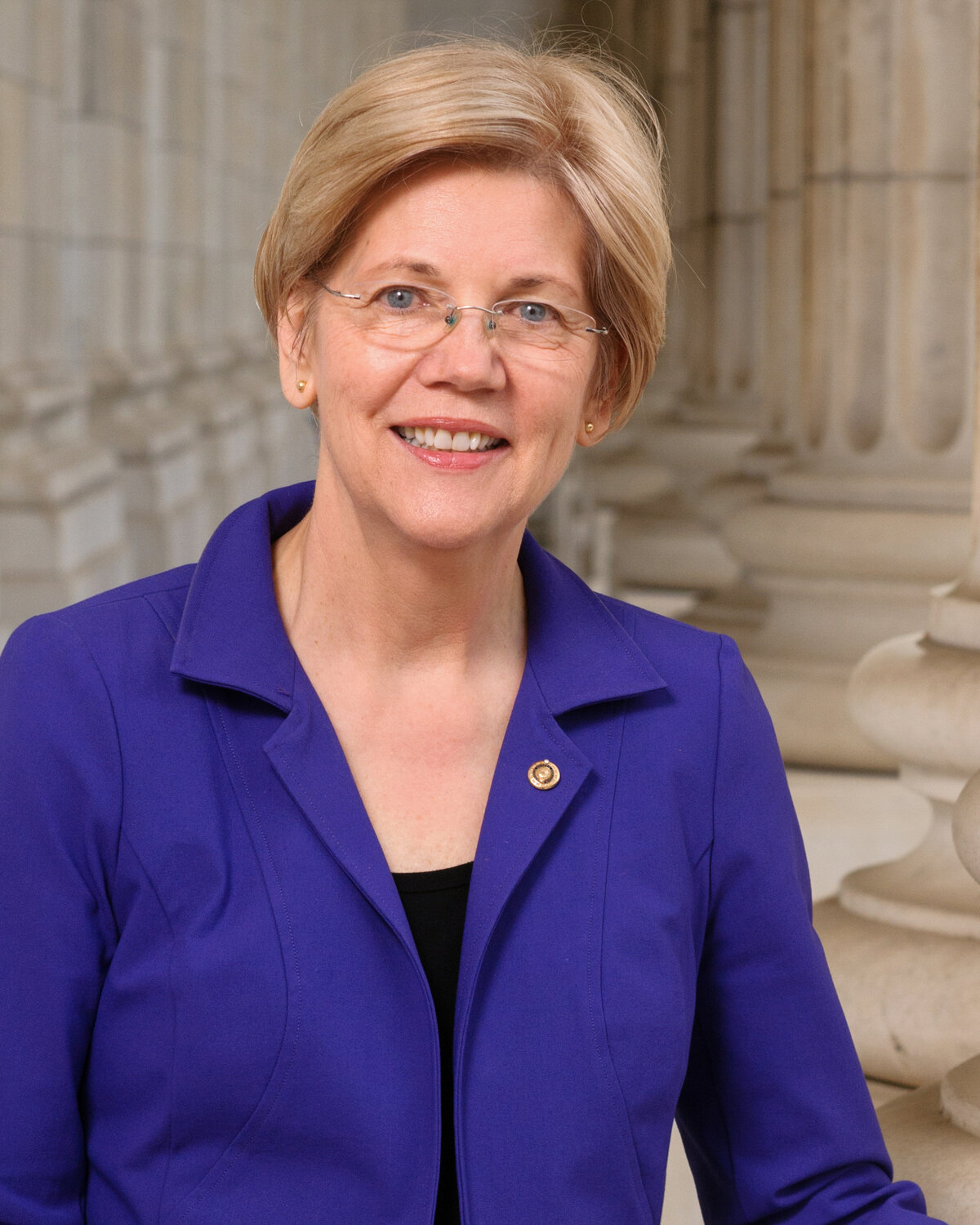
A Senate proposal to harden export controls on advanced AI chips gained new bipartisan momentum, as Sen. Elizabeth Warren, the Banking Committee’s ranking member, joined Sen. Tom Cotton’s Chip Security Act—roughly nine months after Cotton introduced the measure and it was referred to the Senate Banking Committee.
U.S. industry groups have amplified calls to overhaul the process for Section 232 tariffs, citing compressed deadlines, opaque criteria, and ballooning compliance costs, while Friday's ruling on the President’s IEEPA‐based tariffs may lead to a broad expansion of 232 actions.

The Defense Department has issued its annual update to the statutory roster of “Chinese military companies” operating in the United States under Section 1260H of the FY 2021 National Defense Authorization Act, adding several prominent commercial firms while clarifying that the designation itself does not prohibit ordinary private-sector transactions.

The Trump administration is preparing to scale back portions of its steel and aluminum tariff regime—particularly the “derivative” duties applied to downstream goods—as it confronts …
U.S. Trade Representative Jamieson Greer attended the February 12 signing of an Agreement on Reciprocal Trade between the United States and Taiwan, concluded under the auspices of the American Institute in Taiwan and the Taipei Economic and Cultural Representative Office in the United States.

Congressional negotiations over fiscal-year 2026 funding for the Department of Homeland Security (DHS) remained unresolved as of February 11, leaving the department at risk of a partial shutdown.

The Nigerian head of the World Trade Organization said long overdue reform of the 30-year old body will be “front and centre” at next month’s ministerial conference in Cameroon, as it grapples with an existential crisis.
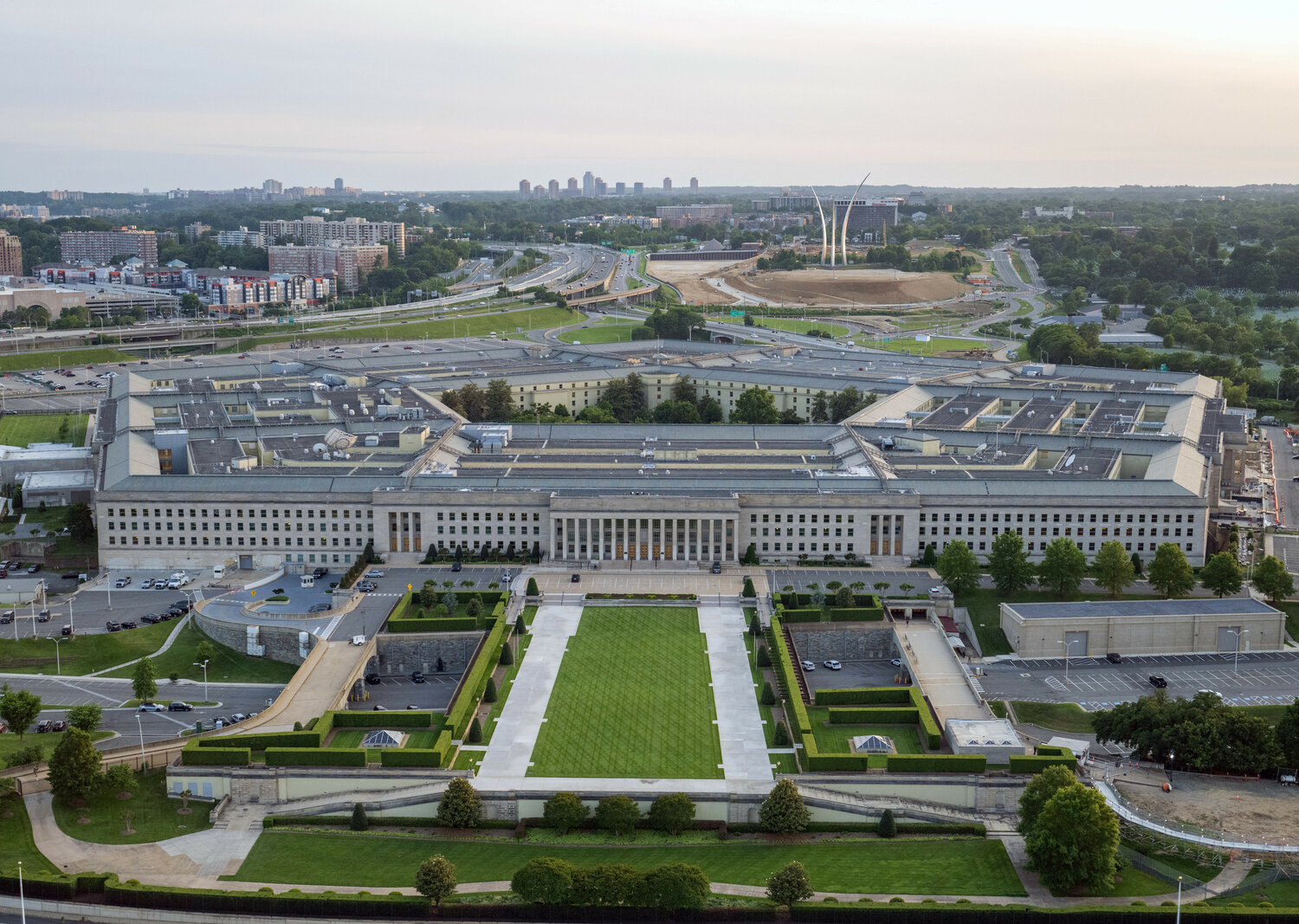
The Defense Security Cooperation Agency (DSCA) and Defense Technology Security Administration (DTSA) have been realigned under the Office of the Under Secretary of War for Acquisition and Sustainment (A&S), marking a structural shift in how the Pentagon manages foreign military sales (FMS) and broader security-cooperation functions.
Sen. Bill Cassidy (R-La.) has introduced legislation aimed at eliminating the long-standing “first sale” customs valuation practice, arguing the rule enables duty underpayment, distorts tariff policy, and disadvantages U.S. manufacturers and workers.

The United States and Bangladesh on February 9 signed a bilateral Agreement on Reciprocal Trade establishing tariff preferences, binding commitments on non-tariff barriers, and new obligations spanning labor, digital trade, intellectual property, and supply-chain security.

The U.S. Department of Defense has awarded a roughly $210 million sole-source contract to the Israeli state-owned manufacturer Tomer for production of a new 155 mm cluster artillery munition, marking an unusual reversal in the traditional direction of U.S.–Israel arms transfers and one of the largest publicly recorded U.S. purchases from an Israeli defense firm in recent decades.
The White House on February 6 issued an executive order removing a 25 percent additional ad valorem duty previously imposed on imports from India in response to New Delhi’s purchases of Russian oil, formally modifying U.S. tariff treatment as part of the emerging U.S.–India trade understanding.

The facilitator for World Trade Organization reform discussions, Petter Ølberg, said he hopes the upcoming 14th Ministerial Conference (MC14) will come to be known as a “reform ministerial.” The objective, he explained at a program hosted by the Washington International Trade Association, is not to produce a final document but to establish a path for members to continue reform discussions beyond MC14.

Lawmakers on the House Judiciary Committee this week sharpened scrutiny of the European Union’s Digital Services Act (DSA), framing the law as a regulatory regime capable of reshaping global online speech standards and imposing compliance burdens on U.S. technology companies.

The U.S. Department of the Treasury has issued a Request for Information seeking public comment on the proposed Committee on Foreign Investment in the United States (CFIUS) Known Investor Program and additional measures to streamline the foreign-investment review process while preserving national-security protections. First announced in May 2025 and currently operating in pilot form, the Known Investor Program would permit repeat foreign investors to submit detailed background information in advance of a formal CFIUS filing.

U.S. Trade Representative Jamieson Greer and Argentina’s Minister of Foreign Affairs, International Trade, and Worship Pablo Quirno signed the United States–Argentina Agreement on Reciprocal Trade and Investment (ARTI).

Rep. Ro Khanna, the ranking member of the House Select Committee on the Chinese Communist Party, has requested documents and answers from World Liberty Financial and associated parties regarding a reported $500 million investment tied to an Abu Dhabi royal, citing potential national-security and constitutional concerns.