
A Supreme Court decision invalidating President Trump’s “Liberation Day” tariffs would set off an immediate operational response by importers, followed by a rapid policy recalibration inside the administration and renewed focus on whether the Department of Commerce—particularly the Bureau of Industry and Security (BIS)—has the capacity to migrate tariff policy from emergency powers to conventional trade statutes.

The State Department’s Strategic Plan for Fiscal Years 2026–2030 places trade, industrial capacity, and technology control at the center of U.S. foreign policy, framing economic policy explicitly as national-security strategy.

In a speech at the Sejong Institute in Seoul on January 26, Under Secretary of Defense for Policy Elbridge Colby articulated a foundational shift in U.S. strategy toward Asia, framing defense policy as intertwined with economic statecraft and trade.

The U.S. Department of Commerce on Thursday released two first-year summaries highlighting foreign direct investment (FDI) and export promotion outcomes under the current administration, reporting record figures for SelectUSA-facilitated investment deals and government-supported U.S. export contracts.

The Pentagon quietly released its 2026 National Defense Strategy (NDS) late Friday, setting out a sharp reorientation of U.S. defense policy toward homeland defense, trade-linked security interests, expanded allied burden-sharing, and a rebuilt defense industrial base.

In a special address at the World Economic Forum in Davos on January 19, European Commission President Ursula von der Leyen argued that geopolitical shocks should be treated as a catalyst for a lasting transformation of Europe’s economic, security, and political model, warning that reliance on past global arrangements is no longer viable.
A new report from the White House Council of Economic Advisers (CEA) argues that artificial intelligence could trigger a new period of global economic divergence, echoing the Industrial Revolution’s uneven distribution of growth.

Recent departures at the Commerce Department’s Bureau of Industry and Security (BIS) include the exit of senior officials from the Office of Information and Communications Technology and Services (OICTS), an office that has played an increasingly prominent role in national-security technology policy. Friday, Elizabeth “Liz” Cannon, executive director of OICTS, resigned after pressure from senior officials, with one of her deputies having been placed on administrative leave prior to departure.

The United States has taken operational control of Venezuelan oil revenues following its military and political intervention in Venezuela in early January 2026, and the handling of those funds has become a point of contention between the executive branch and members of Congress.

TikTok said Thursday it has finalized a deal creating a new U.S.-based entity majority-owned and controlled by non-Chinese investors, resolving a years-long legal standoff that threatened to ban the app in the United States.

The United States has lost its donor-government seat on the board of Gavi, the Vaccine Alliance, after failing to make a financial pledge for the alliance’s 2026–2030 strategic period, Gavi confirmed. In a related development, Washington’s formal withdrawal from the World Health Organization, completed on January 22, 2026, ends nearly eight decades of U.S. leadership in global health.
The White House has designated Peru and Saudi Arabia as Major Non-NATO Allies (MNNAs), according to presidential determinations signed January 14 and January 13, 2026, respectively, and scheduled for publication in the Federal Register on January 23.
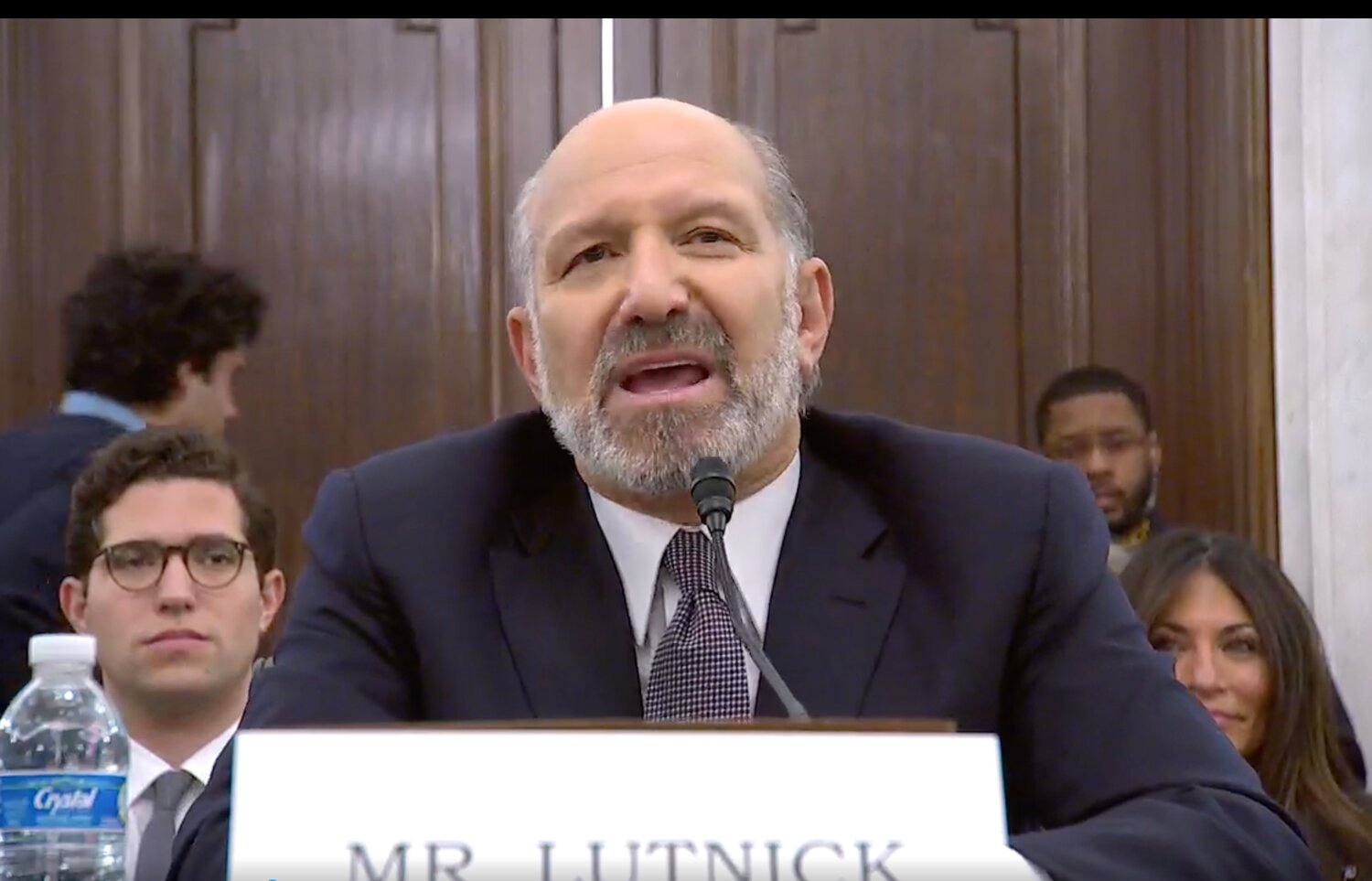
U.S. Commerce Secretary Howard Lutnick triggered an abrupt walkout by Christine Lagarde during an invitation-only dinner at the World Economic Forum, after delivering a sharply critical speech on Europe’s economic performance and energy policy.

Canadian Prime Minister Mark Carney addressed the World Economic Forum Annual Meeting Tuesday, framing the current moment as a structural break in global politics. The “rules-based international order” has given way to unconstrained great-power rivalry, he says. “We are in the midst of a rupture, not a transition. ” He describes a world in which “geopolitics among the great powers is not subject to any constraints.”

For those who've not committed the tariff schedule to memory, Customs & Border Protection has prepared a useful US Tariff Overview infographic.

Speaking at Davos, U.S. Trade Representative Jamieson Greer offered an unapologetic defense of tariffs as both an economic and geopolitical tool, framing the Trump administration’s trade posture as a return to realism rather than a rupture with history.

The European Union’s Anti-Coercion Instrument is moving from legal abstraction to active policy reference point as Washington renews tariff threats against European partners, raising the prospect of formal EU countermeasures against what Brussels defines as economic coercion.

President Donald J. Trump on January 14 invoked Section 232 of the Trade Expansion Act to impose new tariffs on certain advanced semiconductors and derivative products, concluding that current import levels threaten U.S. national security and economic resilience.

President Trump used his bully pulpit and social media holdings to make a series of substantive proclamations on trade and economic security this week, from stiffening his resolve to sieze the territory of a NATO ally, to inviting Havana to "make a deal, BEFORE IT IS TOO LATE,"

A new study finds that the Trump administration has broadly curtailed federal enforcement against alleged corporate misconduct during the first year of the president’s second term, scaling back investigations and cases across criminal, civil, and regulatory regimes with ripple effects for compliance programs nationwide.